
Delhi: the city that has been reborn again and again
Updated: 4 days ago
By Ramya · Spiritual guide · Yoga and meditation teacher
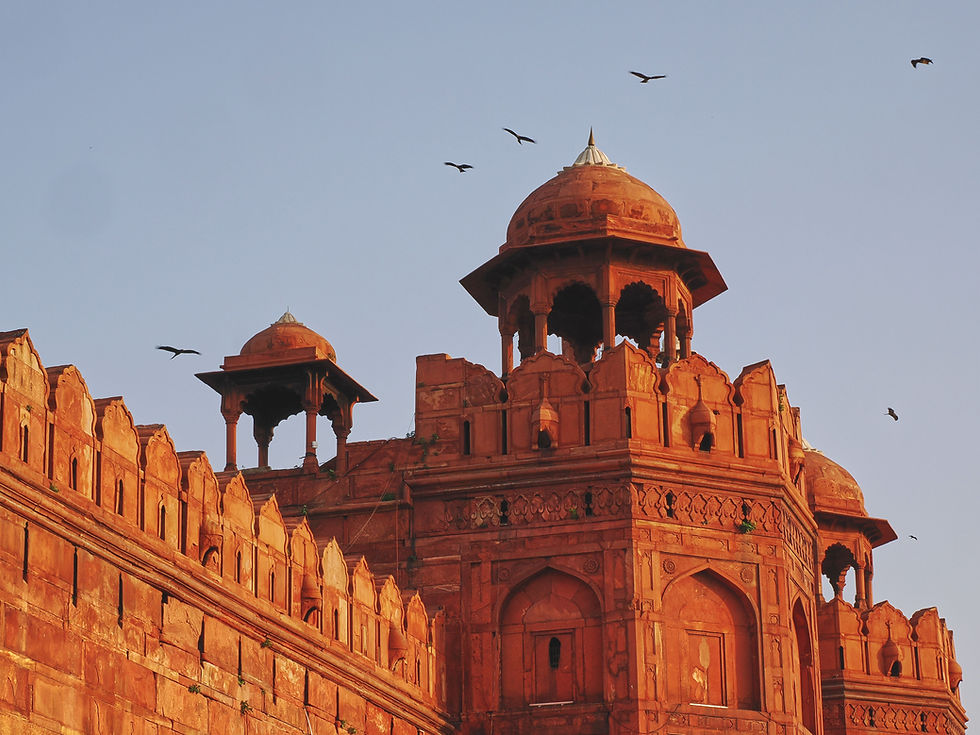
When I walk through Delhi, I often think that beneath the city we see today lie many other worlds… a bit like Mexico City, which is a layering of strata and stories. Delhi brings many eras together into one: the Delhi of the Mughals, of the sultans, of the merchants, of the Sufi saints and, much further back in time, the city identified as Indraprashtha: the capital of the Pandavas, the heroes of the epic known as the Mahabharata.
Delhi's history has traditionally been linked to this ancient text, which dates roughly from between 400 BCE and 400 CE, although the archaeological identification between the city of the poem and a specific place in today's capital remains an almost mythological question — though not, for that reason, an impossible one. Excavations at the Purana Qila (the Old Fort) uncovered materials that led archaeologists to study that possible connection. Remains dating back to the 3rd century BCE were found there, along with materials associated with the so-called “Painted Grey Ware”, a pottery that also appears at several sites traditionally related to the Mahabharata.
This doesn't mean we can claim the Pandavas lived here, but it does explain why this place has remained tied to the memory of Indraprashtha. I love this difference between history and tradition because it is so deeply Indian: a place can be archaeological, historical, literary and sacred all at once…
A Mahabharata temple in the middle of Connaught Place
There is a story I always love to tell when we talk about India's capital. In the very heart of what is today Connaught Place, among shops, offices and restaurants, stands the Pracin Hanuman Mandir, a small temple that holds an extraordinary tradition. It is considered one of the five ancient temples of Delhi associated with the era of the Mahabharata.
The five temples of the Mahabharata era
Pracin Hanuman Mandir — Connaught Place
Kalkaji
Yogmaya
Bhairon
Nili Chatri Mahadev
In this temple, the image of Hanuman is very special because it is a Bala Hanuman (the monkey god in child form). The image is Svayambhu, meaning self-manifested. Its connection to the Pandavas is also fascinating because it links India's two great epics.
In one of the most beautiful episodes of the Mahabharata, Bhima, during his exile, comes across an old monkey lying across his path and asks him to move his tail so he can pass. But the old monkey tells him he has no strength left and that he should move it himself. Bhima, proud of his extraordinary strength, tries to lift it but cannot. After many attempts, he understands that this old monkey is no ordinary monkey, but Hanuman himself… and from then on, he became more humble.
The Hanuman temple has another feature I love showing to those who travel with me. Since 1964, an uninterrupted chant of Shri Ram Jay Ram, Jay Jay Ram has been kept alive there, twenty-four hours a day. Then we step out of the temple and are immediately back among the modern buildings of the 21st century.
The contrast is enormous, but that is precisely Delhi: in this city you don't have to travel hundreds of kilometers to move from one era to another.
— Ramya
Humayun and Nizamuddin: a mausoleum and a saint
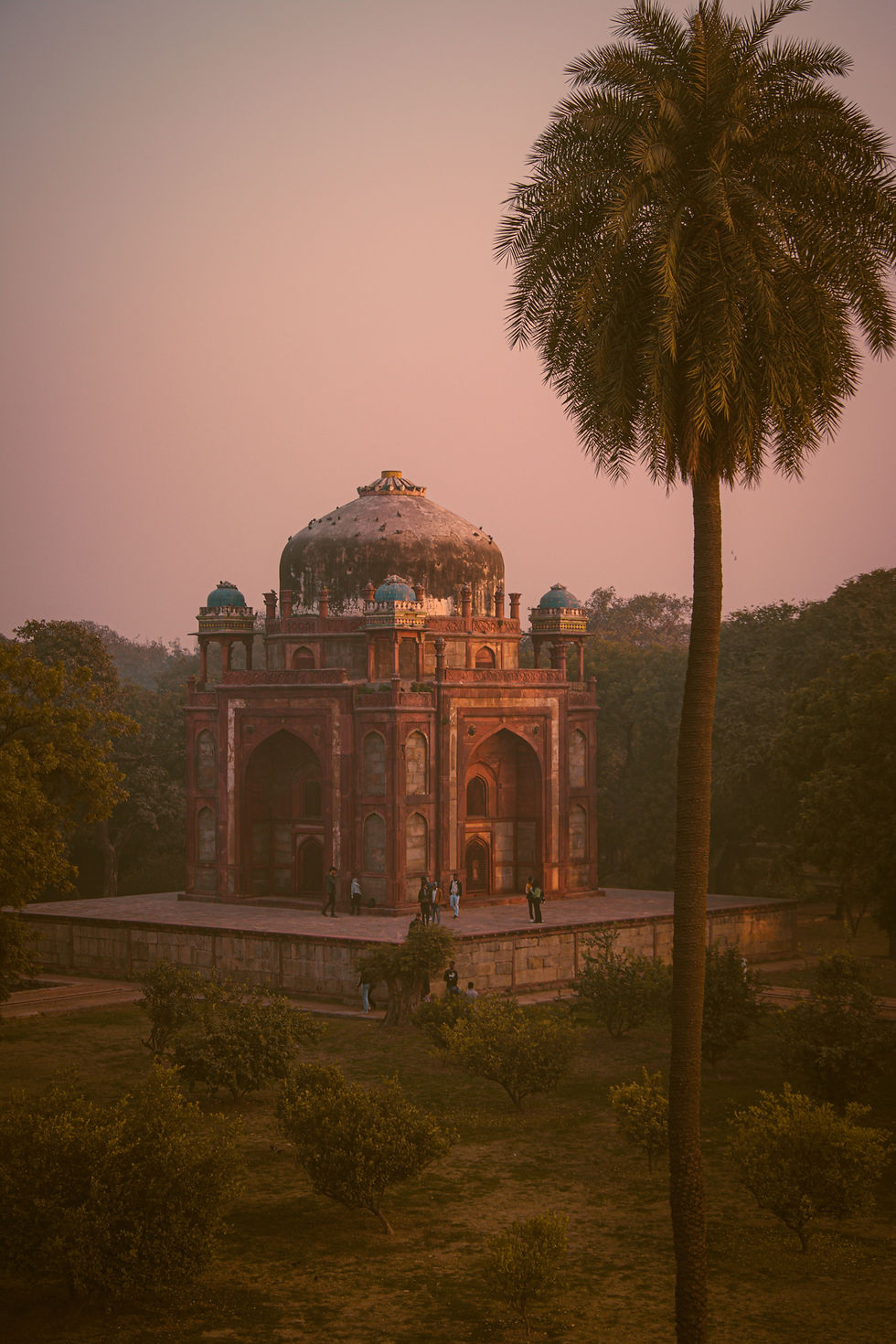
Humayun's Tomb, built in the 16th century at the initiative of his widow, Haji Begum, is considered the first great garden-tomb of the Indian subcontinent and was declared a UNESCO World Heritage Site in 1993. It is an important precursor to the later evolution of Mughal architecture.
Very close to this tomb is the Dargah of Hazrat Nizamuddin Auliya, one of the great saint-masters of the Chishtiyya Sufi tradition, who lived in Delhi between the 13th and 14th centuries. The shrine (Dargah) is built around his tomb, and it is said that seekers can experience Baraka: a spiritual blessing that comes from God but is made manifest through the saints.
I have been to this place many times, and I love going to the qawwali evenings (mystical chants of the Sufi tradition). It is hard to put into words what I feel with that music in particular, which often accompanies the compositions of Amir Khusrau, one of the great poets, musicians and artists of the subcontinent's culture, who devoted his life entirely to the saint Nizamuddin Auliya. When I am at the dargāh and listen to the qawwali, I often think about the relationship between Guru and disciple, and I marvel again and again at the possibility this culture offers: that one human being can find in another human being a doorway to the Divine.
Old Delhi: the city of Shah Jahan
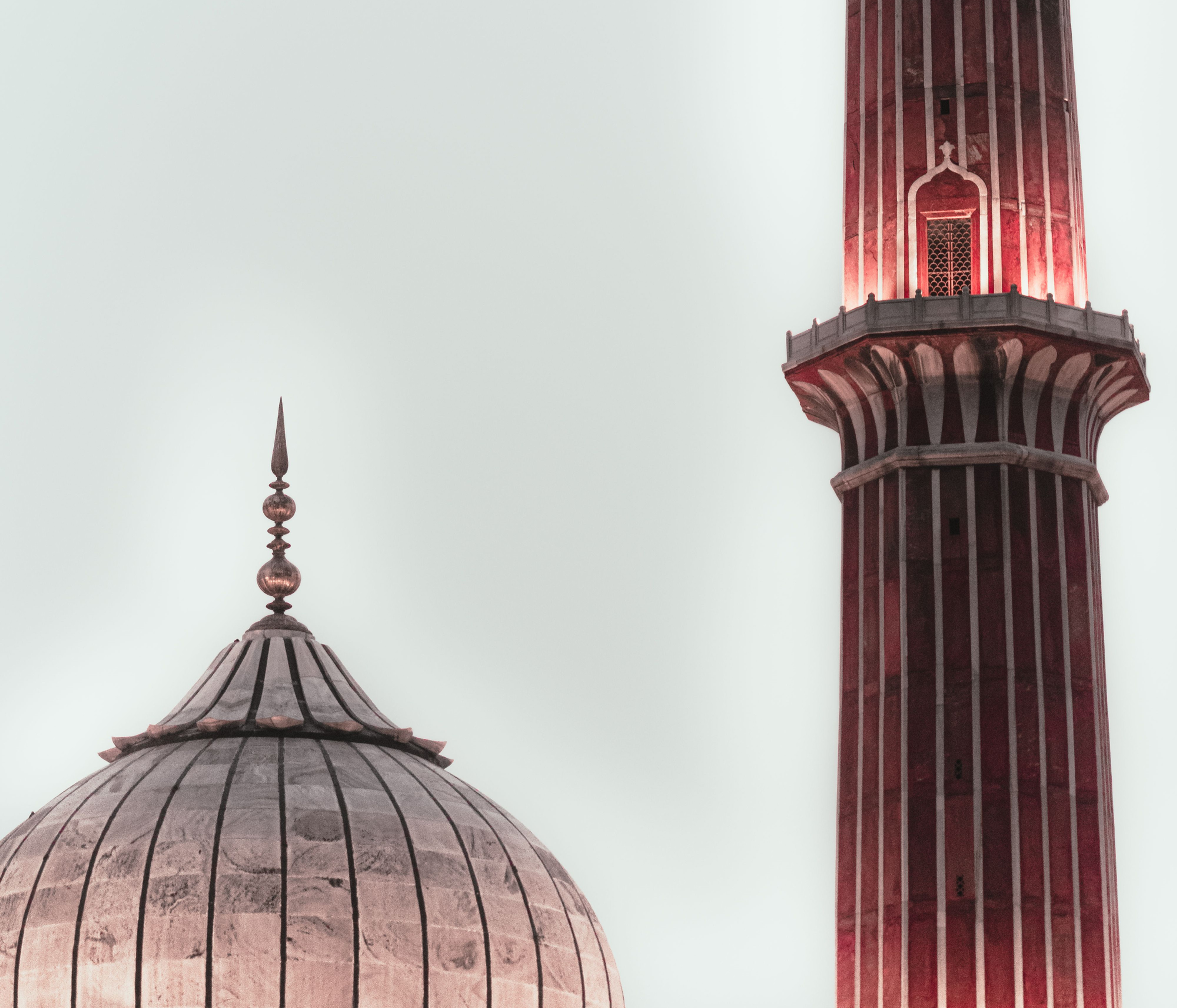
Then there is the city we now call Old Delhi (Purani Dilli), whose original name was Shahjahanabad, the great city built by the Mughal emperor Shah Jahan around 1638. It was conceived as a walled city, with the Red Fort as its imperial center and the Jama Masjid as its most important religious space.
Its streets, mohallas, katras and bazaars gradually formed a city that, to this day, works just as it did centuries ago: you can wander into its narrow, labyrinthine lanes, where old shops and havelis (old palaces) still survive.
Why our journeys begin here
That is why most of our journeys begin in Delhi, which is in itself a summary of India: ancient and modern at the same time, chaotic and yet deeply ordered by its own rules. It is a city that has been destroyed, rebuilt, conquered, abandoned and made a capital once again — which makes it perfect for preparing travelers to understand that in this country the past has not been left behind, but is as alive as the present itself.
The layers of Delhi
Five cities in one, from the epic to the 21st century
Epic era · Indraprashtha — Capital of the Pandavas; remains at Purana Qila from the 3rd c. BCE.
13th – 14th c. · Nizamuddin — The Chishtiyya Sufi saint and his Dargah.
16th c. · Humayun's Tomb — The subcontinent's first great garden-tomb. UNESCO, 1993.
c. 1638 · Shahjahanabad — Old Delhi: Red Fort, Jama Masjid, bazaars and havelis.
Today · Connaught Place — Modern offices and a chant to Ram, unbroken since 1964.
— Ramya, Spiritual guide · Yoga and meditation teacher
Comments